

When someone is incarcerated, they do not lose their constitutional rights. Both public and private prisons have a legal duty to ensure inmates are housed in safe conditions and protected from unnecessary harm. Unfortunately, serious violations still occur, including prison violence, denial of medical care, excessive force by correctional officers, and dangerous facility conditions.
When these violations occur in a privately operated prison, injured inmates and their families may have the right to file a federal civil rights lawsuit under 42 U.S.C. § 1983. These lawsuits can help victims recover compensation while also holding prison operators accountable for unconstitutional conduct.
Below are answers to some of the most common questions about private prison civil rights lawsuits and prison injury claims.
Can You Sue a Private Prison for Violating Constitutional Rights?
Yes. Private prison companies and their employees can be sued under 42 U.S.C. § 1983 when they violate an inmate’s constitutional rights while performing a state function such as incarceration.
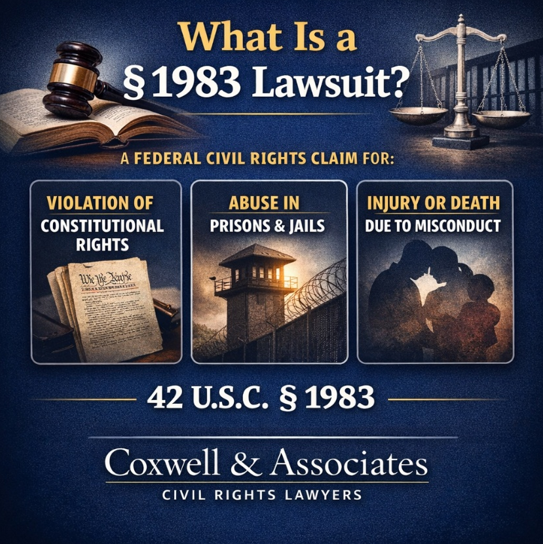
Courts have repeatedly held that operating a prison is traditionally a government function, even when the facility is managed by a private contractor. Because of this, private prison staff may be held liable when their actions or policies result in unconstitutional conduct, such as excessive force, denial of medical care, or failure to protect inmates from violence.
What Constitutional Rights Do Inmates Have in Prison?
Even while incarcerated, inmates retain several important constitutional protections under federal law. These include:
- The Eighth Amendment, which protects against cruel and unusual punishment
- The right to reasonable protection from violence by other inmates
- The right to adequate medical care for serious medical conditions
- Protection against excessive force by correctional officers
- The Fourteenth Amendment right to due process
When prison officials show deliberate indifference to a serious risk of harm, they may be held responsible in a federal civil rights lawsuit.
What Is “Failure to Protect” in a Prison Lawsuit?
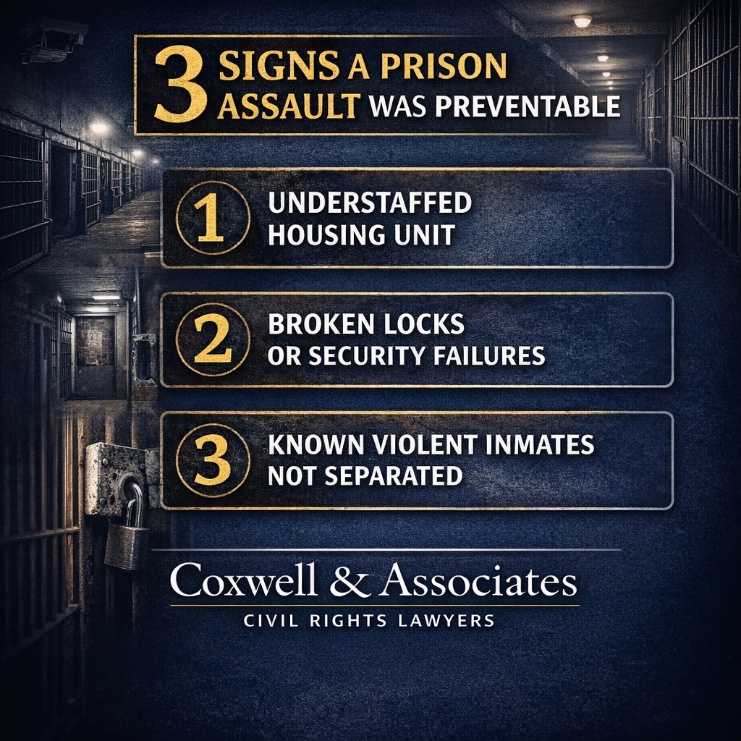
A failure-to-protect claim arises when prison officials know about a serious risk to an inmate’s safety but fail to take reasonable steps to prevent harm.
Examples of failure to protect may include:
- Ignoring threats from violent inmates or prison gangs
- Allowing inmates into housing areas or cells they are not authorized to enter
- Housing vulnerable inmates with known violent offenders
- Failing to secure cell doors, housing units, or controlled areas
If prison officials were aware of the danger and failed to act appropriately, the injured inmate may have grounds for a §1983 civil rights claim.
Can Families Sue If Someone Dies in Prison?
Yes. When an inmate dies due to unconstitutional conduct—such as failure to protect, excessive force, or denial of medical care—surviving family members may pursue both a wrongful death claim and a federal civil rights lawsuit.
These cases often involve circumstances such as:
- Fatal inmate assaults
- Delayed or denied emergency medical treatment
- Dangerous prison conditions or lack of supervision
- Officer misconduct or excessive force
A civil rights lawsuit may allow the family to seek compensation while also holding responsible individuals and prison operators accountable.
Do Private Prison Guards Have Qualified Immunity?
In many cases, private prison employees are not entitled to qualified immunity, a legal defense that is often available to government officials in civil rights cases.
Because private prison companies operate as contractors rather than government agencies, courts have sometimes ruled that their employees cannot rely on this defense. This means that victims of constitutional violations may have a greater opportunity to pursue accountability through federal litigation.
What Damages Can Be Recovered in a §1983 Prison Lawsuit?
Victims of constitutional violations may be able to recover compensation for a variety of damages, including:
- Medical expenses related to injuries
- Pain and suffering
- Permanent injuries or disability
- Emotional distress and psychological harm
- Wrongful death damages for surviving family members
In certain cases, punitive damages may also be awarded if the conduct was particularly reckless, malicious, or intentionally harmful.
How Long Do You Have to File a §1983 Prison Lawsuit?
The statute of limitations for §1983 civil rights claims typically follows the state’s personal injury limitations period.
In Mississippi, this period is generally three years from the date the injury occurred.
However, prison litigation can involve complex procedural requirements, including administrative grievance rules that must be followed before filing a lawsuit. Because of these complexities, it is important to speak with an experienced attorney as soon as possible.
How Can a Civil Rights Lawyer Help With a Prison Injury Case?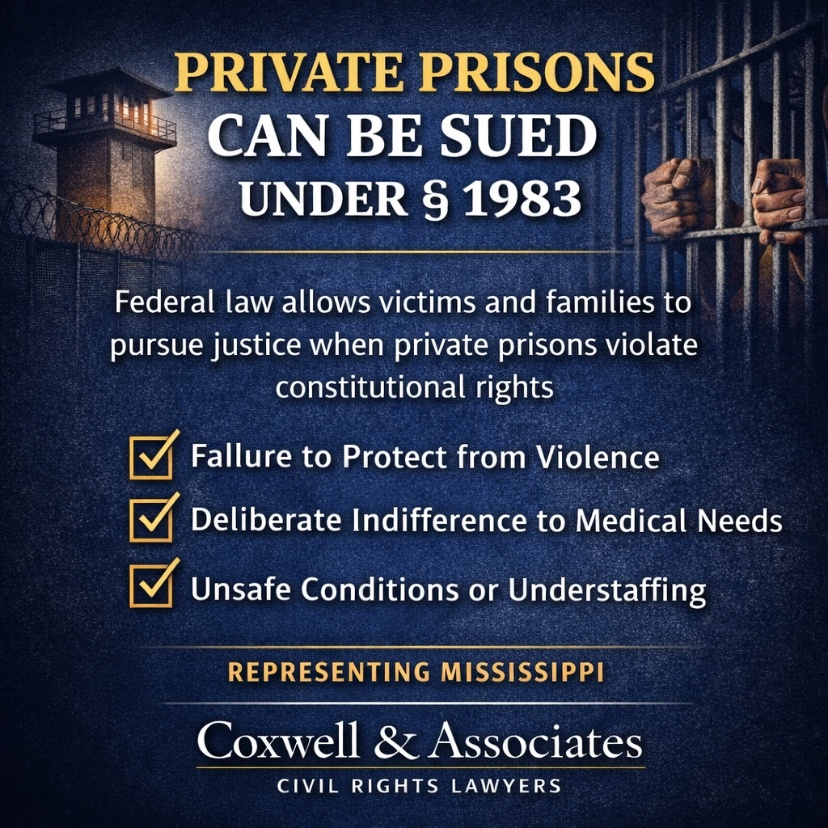
Prison civil rights cases are often complex and require extensive investigation. An experienced attorney can help by:
- Obtaining surveillance footage and prison records
- Reviewing inmate classification and housing decisions
- Analyzing staffing levels and correctional policies
- Consulting with medical professionals and corrections experts
- Filing and pursuing federal civil rights litigation
These cases often involve significant resources and legal expertise, but can be critical for holding correctional institutions accountable for unconstitutional conduct.
Private Prison Civil Rights Attorneys
Coxwell & Associates represents individuals and families in federal civil rights lawsuits involving prison violence, unsafe conditions, and inmate deaths. These cases often require extensive investigation, including:
- Surveillance footage review
- Prison policy analysis
- Medical record evaluation
- Expert testimony regarding correctional practices
If a serious injury or death of a loved one occurred inside a Mississippi private prison, legal action may be necessary to hold the responsible parties accountable.
If you believe a prison failed to protect you or a loved one, speaking with an experienced civil rights attorney is an important step. Call Coxwell & Associates today at (601) 265-7766 to schedule a consultation and discuss your legal options.